
Best for
Scenic drives, hiking, mountain villages and dramatic coastal scenery
Typical visit time
Half a day to multiple days
Tickets
Free to explore, with village and site admissions varying
Location
Northwest Mallorca, from Andratx to Pollença
Why visit the Serra de Tramuntana?
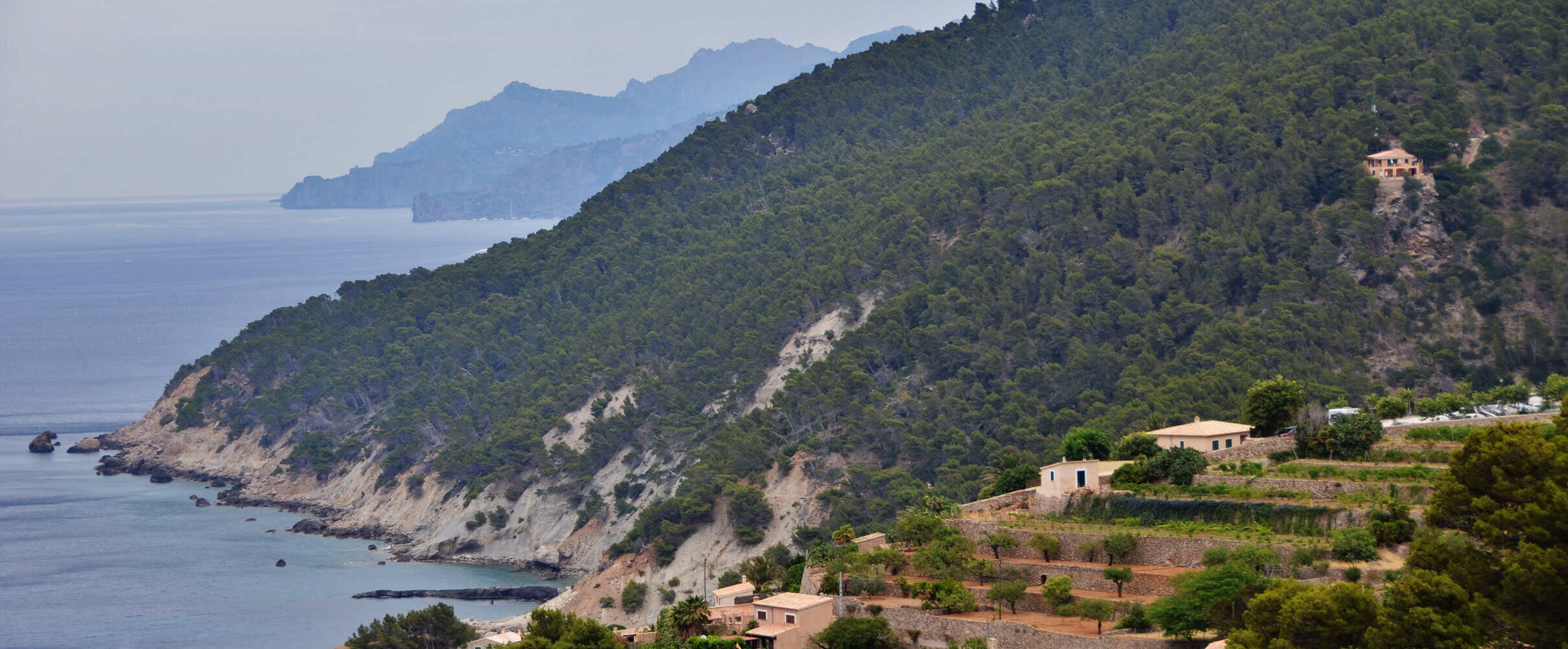
The Serra de Tramuntana is the mountain range that runs the full length of Mallorca’s northwest coast, rising steeply from the sea to peaks above 1,400 metres.
In 2011 it was awarded UNESCO World Heritage status, recognised not only for its dramatic landscape but for the centuries of human cultivation that created its terraced hillsides, dry-stone walls, watermills and mountain villages.
The range stretches from Andratx in the southwest to Cap de Formentor in the northeast. Along its length it contains Mallorca’s most celebrated villages, dramatic coastal roads, high peaks and rewarding hiking routes.
For many visitors, the Serra de Tramuntana is the part of Mallorca that feels most distinct and most worth slowing down for.
What to see in the Serra de Tramuntana
01
The northwest coastal road
The Ma-10 between Andratx and Pollença threads through villages, clifftops and mountain passes with sea views around every bend.
02
Deià, Valldemossa and Sóller
The three celebrated villages are natural stops on any northwest tour, each with its own history, scenery and rhythm.
03
Hiking routes
The GR-221 Dry Stone Route runs through the range, while shorter day hikes lead from villages to viewpoints and old farmsteads.
04
Mirador de Ses Barques and viewpoints
The Tramuntana road is dotted with viewpoints offering sudden, wide views across the sea, hillsides and mountain ridgeline.
Visitor tips
- Drive slowly on mountain roads and give cyclists plenty of space.
- Morning and late-afternoon light are best for the coastal road and photography.
- Spring is one of the finest seasons for blossom, hiking weather and clearer roads.
- Combine the scenic drive with two or three villages rather than rushing the whole range in one day.
Serra de Tramuntana FAQs
Is the Serra de Tramuntana a UNESCO World Heritage Site?
Yes. The Serra de Tramuntana was awarded UNESCO World Heritage status in 2011 for its cultural landscape and traditional mountain agriculture.
What is the best way to see the Tramuntana?
By car is the most flexible option, while hiking the GR-221 in stages is the most immersive experience for visitors with more time.
How long does it take to drive the Ma-10 coastal road?
The full route can take around two hours without stops, but a full day is better with villages, viewpoints and lunch.
Can I hike in the Tramuntana without a guide?
Yes, many routes are marked. For longer or higher routes, check conditions carefully and carry proper maps and equipment.